Trezor Login
Securely access your Trezor wallet through Trezor Suite and protect your crypto safely.
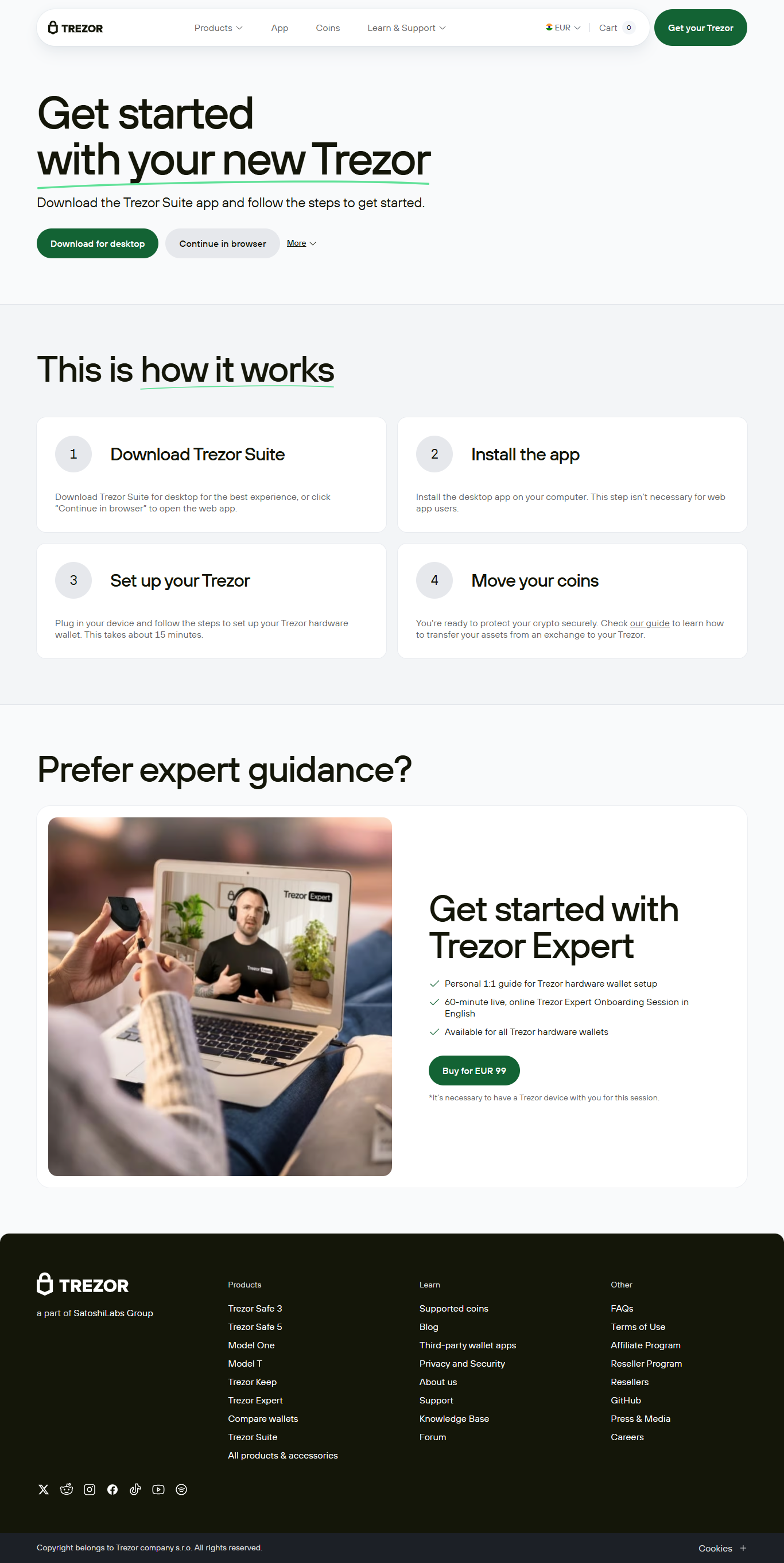
Welcome to Trezor Login
Welcome to the official Trezor login guide — your step-by-step walkthrough for safely accessing your Trezor hardware wallet. Trezor provides the most secure way to manage your cryptocurrency by keeping your private keys offline and out of reach from hackers or malware. Logging into your Trezor wallet is simple, but it’s crucial to follow each step carefully to protect your assets.
This guide will help you understand the correct login procedure, how to recognize legitimate login portals, and the best practices to ensure your crypto remains secure every time you access your wallet.
1. Understanding Trezor Login
Unlike online wallets that rely on passwords, Trezor uses your physical hardware wallet to verify your identity. You don’t log in using a username or password. Instead, your Trezor device generates private keys locally, and every login must be confirmed on the physical device itself. This ensures that even if your computer is compromised, hackers cannot access your funds.
To access your crypto, you’ll use Trezor Suite — the official desktop and web application that interfaces with your device. Always verify that you’re using the legitimate Trezor Suite or the official website https://trezor.io.
2. Before You Begin
- Ensure you have your Trezor hardware wallet (Model T, Safe 3, or One).
- Install the latest version of Trezor Suite on your computer.
- Make sure your device firmware is up to date.
- Have your PIN and, if applicable, passphrase ready.
- Never attempt to log in from unverified websites or fake portals.
3. How to Log in to Your Trezor Wallet
Logging in to your wallet with Trezor Suite is quick and secure. Follow these steps carefully:
Step 1: Connect Your Trezor Device
Plug your Trezor device into your computer using the provided USB cable. Open the Trezor Suite app or visit the official web app link at https://suite.trezor.io/web/. The app will automatically detect your device and prompt you to continue.
Step 2: Enter Your PIN
Once connected, you’ll be asked to enter your PIN. Your PIN protects your wallet against unauthorized access. The input grid on your computer screen corresponds to a randomized layout on your Trezor device — this prevents malware from guessing your PIN even if your screen is being recorded.
Step 3: Enter Your Passphrase (Optional)
If you’ve enabled the passphrase feature, you’ll need to enter it now. Each unique passphrase creates a separate hidden wallet, providing additional layers of security. Always remember that passphrases are case-sensitive and unrecoverable if forgotten.
Step 4: Access Your Dashboard
After verifying your credentials, your wallet dashboard will open. Here you can view your balances, send and receive crypto, and manage your assets securely. All sensitive operations, like sending coins or exporting public keys, must still be confirmed on your Trezor device.
4. Trezor Suite Login Options
You can access your wallet in two ways:
- Trezor Suite Desktop: Recommended for maximum security. Runs locally and doesn’t rely on your browser.
- Trezor Suite Web: A browser-based option that works directly from suite.trezor.io/web.
Both options connect securely to your Trezor device, but the desktop version offers extra protection against phishing attacks.
5. Security Tips for Trezor Login
Logging in safely requires vigilance. The crypto industry attracts phishing scams that mimic official sites. Keep these tips in mind to stay safe:
- Bookmark the official Trezor website: trezor.io.
- Never enter your recovery seed during login.
- Verify every action directly on your Trezor device screen.
- Keep your Trezor firmware and Suite updated.
- Do not trust third-party wallet interfaces or Chrome extensions.
6. Recovering Access if You Lose Your Device
If your Trezor device is lost or damaged, don’t worry — your crypto remains safe. You can recover access using your recovery seed. This list of 12–24 words acts as your master backup.
- Get a new Trezor device from the official website.
- Install Trezor Suite and connect the new device.
- Select “Recover wallet” when prompted.
- Enter each recovery word in order, exactly as written.
- Set a new PIN and confirm on the device.
Once complete, your wallet and all associated funds will be restored. Your coins are always stored on the blockchain, not the device itself.
7. Troubleshooting Login Issues
Device Not Detected
- Try a different USB cable or port.
- Restart both your computer and the Trezor device.
- Reinstall Trezor Suite from the official site.
Forgotten PIN
If you forget your PIN, you can reset your device by erasing it and restoring your wallet with your recovery seed. Your crypto remains safe as long as you have your recovery words.
Passphrase Not Working
Check that your passphrase is spelled exactly as before — they are case-sensitive and space-sensitive. If you enter a different passphrase, you’ll simply open a different empty wallet.
8. Why Trezor Login Is Different
The Trezor login process isn’t just about access — it’s about security. Every login requires your physical confirmation, ensuring no one can sign transactions on your behalf. The private keys never leave your device, and Trezor Suite communicates using encrypted channels.
This architecture eliminates common attack vectors seen in online wallets, making Trezor a cornerstone of true self-custody. It empowers you to control your wealth independently, without relying on third-party custodians.
9. Protecting Yourself from Fake “Trezor Login” Sites
Many phishing websites mimic the appearance of official Trezor portals to trick users into entering recovery seeds. These fake sites often appear in search ads or emails. Always:
- Manually type trezor.io into your browser.
- Check for HTTPS and correct spelling.
- Never click login links from emails or social media.
- Verify the digital certificate if unsure.
If you ever suspect a phishing attempt, report it immediately to Trezor support through the official contact page.
10. Staying Safe After Logging In
Once logged in, always confirm all outgoing transactions on your device screen. Trezor displays both the destination address and amount, ensuring you know exactly what you’re approving. Never trust your computer screen alone.
- Keep your Trezor connected only when needed.
- Enable “Watch-only” mode in Trezor Suite for monitoring balances without connecting your device.
- Disconnect your wallet after each session.
11. Trezor Login for Businesses and Advanced Users
For advanced or institutional users, Trezor integrates with software like Electrum and MyEtherWallet. Always connect through trusted channels and verify every signing request on your device. Trezor Suite remains the recommended interface for most users, thanks to its intuitive design and robust security.
12. Conclusion
Secure login is the foundation of cryptocurrency protection. By using Trezor, you eliminate the risks of online password-based systems. Your device, combined with Trezor Suite, ensures that only you can access and authorize transactions.
Always remember: Trezor will never ask for your recovery seed or PIN online. Keep your device and seed safe, and you’ll always have full control of your digital wealth.
With your Trezor wallet properly secured, you can confidently explore the world of decentralized finance — safely and independently.